AI images are everywhere now, and abstract wall art is one of the biggest targets. You can scroll for five minutes and see thousands of “new” abstracts that look polished, trendy, and ready for home decor. The problem is that a lot of it wasn’t made by an artist at all.
When people say “AI-generated wall art,” they usually mean prompt-made images (often produced in bulk) that get uploaded as prints. Some sellers are transparent about it. Others aren’t, and that’s where buyers get burned.
At ArtFinest, we take a clear stance: our contemporary abstract prints of modern art are created by genuine artists that allow their work to be printed, with no AI slop, and a focus on trust, craft, and materials. If you’re browsing abstract prints for sale and trying to buy art online with confidence, the goal isn’t paranoia. It’s learning a few simple tells, then choosing wall decor that has a real human behind it.
Key Takeaways
- AI-made abstract wall art often looks great as a thumbnail but breaks down up close, especially at edges, textures, and tiny details.
- Common visual signs of AI include repeating patterns, plastic-smooth areas, muddy boundaries where colors meet, odd lighting, and too-perfect symmetry.
- Listing red flags matter as much as the image, watch for no named artist, vague process wording, missing print specs (paper, canvas, inks), and endless variations.
- Buy with a simple standard: confirm the artist, ask for process proof, check high-resolution close-ups, and only purchase when print materials and fulfillment details are clear.
- Authentic abstract prints should have clear authorship, clear print method (for example, giclee with archival inks)
Why AI-made abstract wall art is hard to spot
Abstract art doesn’t have obvious “wrong” details like hands, faces, or lettering. That’s why AI abstracts can pass at a glance, especially in small thumbnail images.
In 2026, image tools for modern art are also better at hiding their seams. They can create convincing color palette harmony, believable depth, and stylish composition in seconds. Still, many AI pieces share the same feel: surfaces that look too smooth, details that don’t hold up close, and “complexity” that turns to mush when you zoom in.
Abstract art can mask mistakes, so you need a closer look
Abstract styles can hide problems because the viewer expects ambiguity. Styles like minimalist art can hide problems especially well. A few common masking tricks show up again and again:
Soft gradients that look like airbrushed fog, with no real texture underneath.
Texture overlays that feel stamped on, like a filter sitting on top of the whole image.
Foggy shapes and haze that avoid hard edges, so the image doesn’t need to resolve details.
Before you fall in love with a piece, check the zoomed-in images and product close-ups. If the seller doesn’t show them, that’s information too.
The real risk for buyers: paying for a file, not an artwork
The most common disappointment isn’t “I bought AI.” It’s “I paid for something that looked rich and high quality online, and it arrived flat.”
AI bulk decor is often uploaded as a single file, then printed as cheaply as possible. That can lead to:
Low resolution that looks fuzzy on larger art prints
Weak blacks and dull color
Thin materials that ripple or warp
Zero artist involvement, no story, no continuity
Authentic abstract work holds meaning because it carries choices, revision, taste, and restraint. Even when it’s reproduced as a print, it still comes from an original vision.
Red flags that an “abstract print” might be AI-generated
One red flag doesn’t prove anything. Plenty of human-made digital art exists with thoughtful visual interpretation, and some artists use tools in honest ways. Still, when you see several of these signs together, slow down and look closer.
A simple test: open the product image, zoom to 100%, and scan the edges and transitions. AI often looks best from far away.
Visual clues in the image: repeating patterns, plastic textures, and odd lighting

Photo by Google DeepMind
Here are the visual tells that matter most for abstract wall art in 2026:
Repeats that feel accidental: faint grid-like echoes, duplicated curves, or cloned geometric shapes that don’t seem intentional. Abstract art can repeat motifs, but it usually does so with variation and control.
Plastic smoothness: large areas that look slick and airbrushed like CGI, with no natural break. Human abstracts often show organic shapes with edge work, layering, scumbles, dry brush effects, or visible brush strokes for controlled roughness.
Muddy micro-details: zoom in and watch what happens at boundaries. AI can struggle where colors meet, creating small smears, strange speckling, or edges that feel undecided.
Odd lighting logic: even in abstract work, highlights and shadows should “agree” with each other. AI sometimes adds glossy highlights that don’t match the form, so the piece looks polished but flat.
Too-perfect symmetry: perfect mirroring can be a style choice, but AI symmetry often looks like a quick trick to feel “designed,” not composed.
A human abstract can be clean and minimal, of course. The difference is that intentional minimalism still looks deliberate up close.
Listing clues: no artist story, endless variations, and unclear print details
Most AI bulk listings give themselves away through the words, not the image. Watch for:
No named artist with a verifiable background in any artistic movement, or an “artist name” that leads nowhere
Vague phrasing like “digitally created” with no process details
Dozens (or hundreds) of near-identical colorways and compositions
No mention of paper, canvas, inks, or print method
No edition information, no signing details, no certificate of authenticity
Unclear fulfillment details (who prints it, where it ships from)
Return policies that are hard to find or full of exceptions
If a listing reads like a template, it may have been built as fast as the image was made.
The uncomfortable truth: AI “style” often comes from real artists (without permission)
A lot of AI wall art is not created from scratch in the way people assume. Most image models are trained on huge collections of images from across the internet. That mix can include museum photos, commercial illustration, photography, and working artists’ portfolios. The model learns patterns, then generates new images that can echo those patterns.
This is why AI art can feel familiar even when it looks “new.” It can borrow the look of real painters big and small, real abstract movements, and real working artists, then mash those signals into something that reads as art at a glance, but has no lived process behind it.
There are also ongoing legal and ethical debates about whether this kind of training uses copyrighted work fairly or not. The key point for buyers is simple: even when an AI image is technically “new,” it can still be built on uncredited human work.
Why it matters for both the artist and the buyer
When someone sells AI-made abstract prints as if they are authored artwork, two things happen:
- Real artists get diluted. Years of study, experimentation, failure, and refinement become a “look” that can be copied in seconds.
- The buyer is left without a real story. There is no studio practice, no intent you can trace, and no consistent body of work behind the piece.
- It can read as trying too hard. People with real experience in art often notice when a piece has no compositional purpose up close. If the work feels like trend-chasing decor, it can make the space, and the buyer, look like they picked something to imitate taste instead of build it.
- It disconnects you from craft. Great abstract art is not just color and texture. It is decision-making. It is restraint. It is editing. AI “slop” often piles on effects because it has no reason to stop.
Here, we care about this because abstract art should carry authorship. When a print comes from a real artist, you are not buying a random slop file that resembles a style. You are buying a piece of a practice, with choices you can feel when you stand in front of it.
How to buy authentic abstract art prints online with confidence
You don’t need to become an expert in AI. You just need a buying standard that protects you. Think of it like buying wine: you don’t have to visit the vineyard, but you should know who made it and what’s in the bottle.
The authenticity checklist: artist name, process proof, and clear print specs
Use this as a quick copy-and-save checklist:
-
Named artist with a real bio and a consistent body of work
-
Process proof (studio photos, work-in-progress shots, or a clear explanation of how the piece is made)
-
High-res close-ups of art prints that show texture and fine detail
-
Clear print method (giclee printing with archival inks)
-
Paper, canvas prints, or stretched canvas type listed plainly
-
Sizing and cropping explained (no surprise zooms)
-
Custom framing details (material, color, and whether it’s included)
-
Shipping origin and lead times stated upfront
-
Return policy that’s easy to find and easy to understand
-
Limited edition size, signature, COA (when offered) spelled out clearly
Buying direct from an artist’s site is often the simplest way to cut risk, because the chain of custody stays short.
What “authentic” looks like at ArtFinest: direct-from-the-artist abstract prints
ArtFinest is built around a straightforward promise: the work you see is the work we stand behind. Our abstract art prints are created from real contemporary art processes, with an emphasis on layered color, gesture, and texture that holds up on the wall, not just on a screen.
If you want to see the full range, start with our Abstract Fine Art Prints, featuring museum grade canvas options, solid hardwood frames for framed art, and a presentation designed for real spaces. We don’t sell licensed reproductions, and we don’t sell AI-generated imagery. What you’re collecting is a cohesive body of work from one artist, not a rotating feed of anonymous files.
That difference matters the moment you zoom in, and it matters again years later when you still know why you chose it.
Quick decision guide: should you walk away or ask questions?
Use this simple decision path:
If you spot two or three red flags in this wall decor, pause and inspect the image at 100% zoom.
If the seller can’t answer basic questions about your home decor purchase (artist identity, materials, print method), walk away.
If the seller provides clear specs, a real artist story, and close-ups that hold up, you can move forward with confidence.
Save the idea that matters most: even with affordable art, you’re not only buying a picture. You’re buying proof that someone meant it.
Frequently Asked Questions About Spotting AI-Generated Abstract Wall Art
What are the easiest signs that an abstract print might be AI-generated?
Look for repeating shapes that feel copied, surfaces that look airbrushed, and muddy transitions where colors meet. Also watch for lighting that does not make sense and symmetry that feels like a shortcut, not a design choice. Always zoom to 100% and inspect edges, texture, and fine detail.
Why is AI-generated abstract art harder to spot than AI portraits?
Abstract art does not have obvious accuracy checks like hands, faces, or readable text. That lets AI artifacts hide inside soft gradients, foggy shapes, and broad color fields. The best way to spot issues is to use close-ups and zoomed-in product images.
What listing details should a trustworthy seller include for abstract prints?
A trustworthy listing names the artist, explains the process, and shows high-resolution close-ups. It also states the print method (for example, giclee printing with archival inks), the paper or canvas type, sizing and cropping, shipping origin, and return policy. If offered, it should also list edition size, signing details, and any certificate of authenticity.
Is all AI-assisted art a problem when buying wall art?
Not always. The real issue is transparency and what you are paying for. If a seller is unclear about authorship, materials, and print quality, you risk buying a generic file printed cheaply. If tools are used honestly and the work is sold with clear specs and real artist accountability, the buyer can make an informed choice.
How can I protect myself from buying a low-quality print online?
Use a simple checklist before you buy: confirm the artist identity, look for process proof, zoom in on close-ups, and verify print specs and fulfillment details. If the seller cannot answer basic questions about materials, printing, and who made the work, walk away.
Sentence to apply: Place this FAQ near the end of the article to capture high-intent questions that AI overviews often pull for direct answers, and to reduce buyer doubt right before they exit or click to a product page.
Conclusion
AI-made decor can look great in a thumbnail, but it often falls apart up close, unlike fine art with its genuine depth. Watch for repeating patterns, plastic CGI type smoothness, muddy jagged edges, and listings with no artist, no specs, and endless variations.
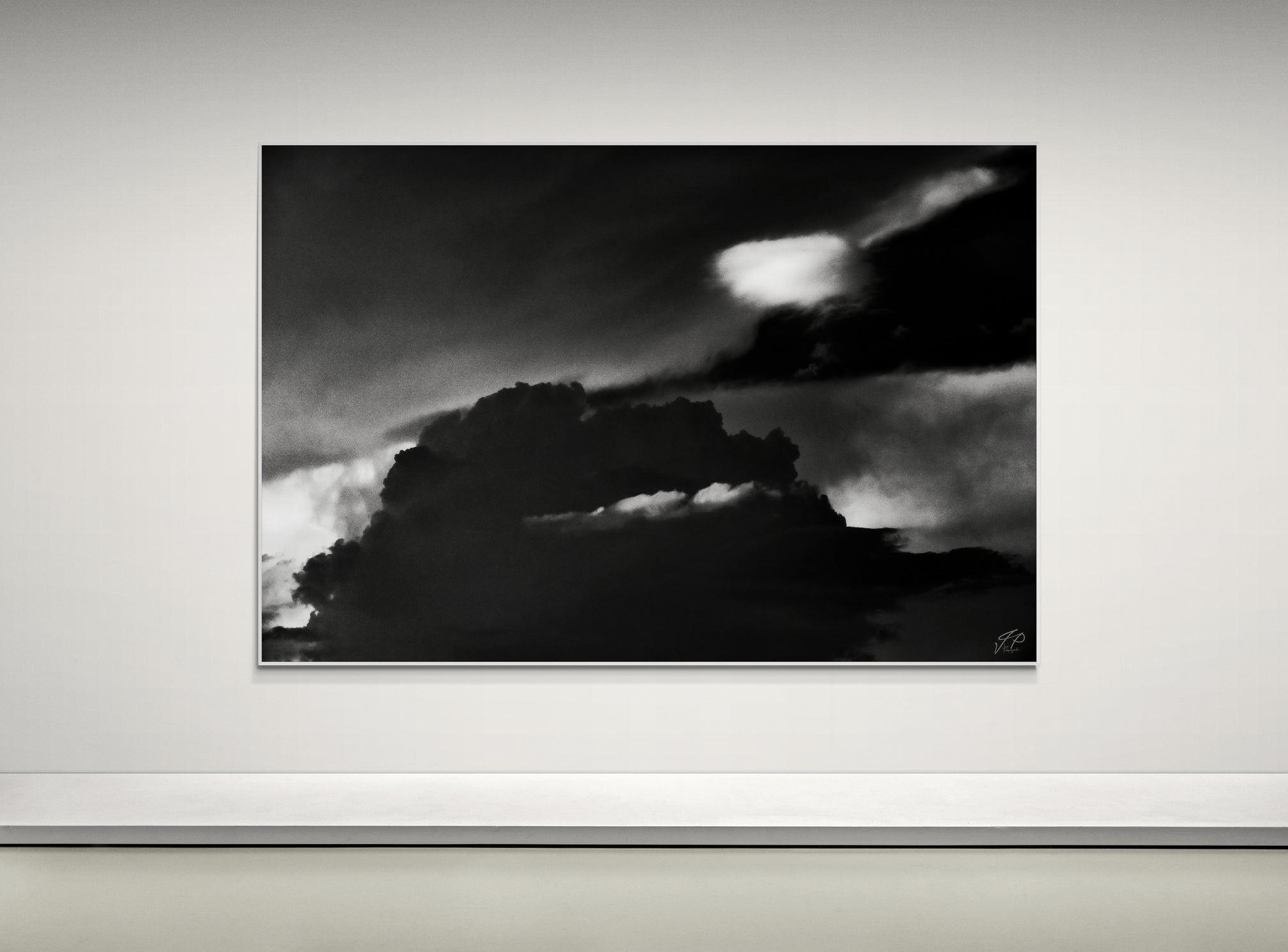
On the other side, authentic art prints like black and white wall art and watercolor prints have clear authorship, honest materials, and details that stay strong when you zoom in. In styles like abstract expressionism, authenticity counts even more.
Choose real work that you can explain, remember, and enjoy for years, perhaps as part of a gallery wall in contemporary style.