A compelling piece of wall art can change how a room feels before you move a single piece of furniture. Yet when shopping online, a beautiful image of a canvas print can hide questions about scale, materials, shipping, and the final cost.
The smart purchase is rarely about finding the lowest price. Affordable art should still suit your room and home decor. Value comes from understanding what you are purchasing and reading every policy before payment.
Start with the room you have, then narrow the options.
Key Takeaways
- Measure the wall, furniture, lighting, and clearance before comparing artwork online.
- Confirm whether you are buying an original, a limited edition, an open edition, or a reproduction such as a canvas print.
- Review the materials, dimensions, framing, finish, certificate details, packaging, insurance, and delivery process.
- Calculate the full landed cost, including framing, shipping, tax, import charges, and installation.
- Read the return and damage policies carefully, then choose art you will enjoy beyond its first impression on screen.
How to Shop for Art Online With Confidence
Online browsing makes it easy to compare styles, but it can make every artwork look the same size. When you buy art online, begin with the wall, the furniture beneath it, and the mood you want to create.
Measure the usable wall space before opening product pages. Then note nearby lamps, switches, moulding, shelves, and door swings. Include the full footprint of framed art, since image dimensions don't show the finished size. A tall portrait-format canvas print needs different clearance than a wide landscape print.
Use a quick room brief to keep your search focused:
- Measure the wall and the furniture below the intended wall art.
- Take a daylight photo and another with your usual evening lighting.
- Set a complete budget that includes framing, delivery, tax, and installation.
- If this begins or extends an art collection, decide whether you want a quiet supporting piece or a focal point with strong color.
Choose the Right Seller Model
Buying directly from independent artists often gives you a closer connection to the work's source and process, including how a canvas print is produced. A curated art gallery may offer more help with pairing pieces through art curation and selecting scale. An art marketplace can provide broad choice and make affordable art easier to compare. Listings still require closer review because materials, dispatch times, and seller policies may differ.
Some galleries provide an art advisory at no charge. Ask what that includes, especially whether it covers art curation and interior design choices. A useful consultation should address wall dimensions, room photos, and style preferences. It should also cover available finishes for a canvas print and delivery practicalities.
International orders need an early conversation. Ask where the work ships from, who acts as importer, and whether the checkout price includes tax or duties. For UK-bound purchases, HMRC's guidance on VAT for imports and purchases from abroad shows why the destination and item classification matter.

An illustrative room view makes it easier to judge scale, color, and placement.
Know Whether You Are Buying Original Art or a Print
“Original art” means the physical piece was made as a unique work. It may be an oil painting, watercolor art, drawing, collage, sculpture, mixed media work, or an original photograph. Its surface, materials, and small variations belong to that one object.
Art prints are reproductions authorized by the artist or rights holder. A canvas print is one reproduction format, and these works can meet a high standard while offering an affordable art option. They aren't interchangeable with originals, so look for a clear description of the image source, edition type, production method, and materials.
This distinction also matters for photography rights, especially with original photographs. Buying a physical artwork or a canvas print does not usually give you the right to reproduce the image in advertising, merchandise, books, or social media campaigns. If you are buying for a business, hotel, or publication, request written permission for any intended commercial use.
Vintage art deserves the same care. When a print uses a historical photograph or illustration, the seller should be able to explain whether the image is public domain or licensed for reproduction.
Read Giclee, Edition, and Certificate Details Closely
A giclee print is a fine-art inkjet reproduction, often made with pigment inks on paper or canvas. A canvas print may use this method, but the term alone does not promise quality. Check the stated ink type, substrate, image dimensions, and finishing process.
“Archival” should mean more than a marketing label for a canvas print. Ask whether the paper, canvas, inks, mat board, and backing are acid-free or designed for long-term display. A good listing names these materials instead of relying on vague claims.
Limited edition prints have a declared number of prints. The marking 12/50 means the twelfth print in an edition of 50. An open edition has no announced cap. Neither option is automatically better, but an edition number gives you useful context about scarcity.
A certificate of authenticity, often called a COA, documents the work. For a canvas print, the COA should identify the artist, title, medium, dimensions, date, and, where relevant, the edition number and total edition size. Keep it with the invoice and order confirmation. A COA supports provenance, but it does not guarantee future resale value.
For rooms that need a strong focal point, compare palette and composition across contemporary abstract wall art and other fine art prints instead of choosing from one isolated thumbnail.

Color, geometry, and contrast can help abstract art set the emotional temperature of a room.
Match Wall Art Size to Furniture, Light, and Viewing Distance
A listing may show only the image dimensions for a canvas print. The finished framed art may have a much larger footprint. Always compare the overall outside measurements with the exact wall space you measured.
This simple reference keeps the decision grounded:
| Placement | Measure Before Ordering | Confirm in the Listing |
|---|---|---|
| Above a sofa | Sofa width, arm clearance, and ceiling height | Overall framed width, canvas print scale, and hanging hardware |
| Above a console | Console width and objects that will remain below | Orientation, frame depth, canvas print visual weight |
| On a feature wall | Usable blank wall, windows, vents, and switches | Full dimensions, canvas print finish options, and delivery method |
| In a hallway | Walking clearance and viewing distance | Frame projection, canvas print depth, and protective glazing, if used |
Painter's tape offers a low-cost way to test proportions before ordering a canvas print. It makes affordable art easier to evaluate at home. Leave it in place for a day so you can see it in natural light and under lamps. This also reveals whether a horizontal piece needs more width or a vertical work needs more breathing room.
When comparing abstract art for sale, look beyond the dominant color. Study the balance of light and dark areas, the direction of the marks, and the amount of empty space. A canvas print with a rich blue field may feel calm in one composition and heavy in another.
Monochrome art can work especially well in rooms with changing colors or patterned textiles. Black and white art prints draw their impact from contrast, shape, and tonal range, so they can hold a room together without adding another competing hue.
Inspect Materials, Framing, and Delivery Plans
A canvas print has a printed surface stretched over a frame or stretcher. For wall art, confirm whether a canvas print arrives stretched and ready to hang. A rolled canvas print may suit some budgets or destinations, but delivery and mounting costs can undermine affordable art's bargain.
For paper prints, check whether the listed size includes the border, then compare it with a canvas print's dimensions. For framed art, ask about the material, glazing, mat, backing, and hardware, especially when a canvas print is included. Custom framing differs from a standard ready-to-hang option and can change total cost, final size, and return terms.
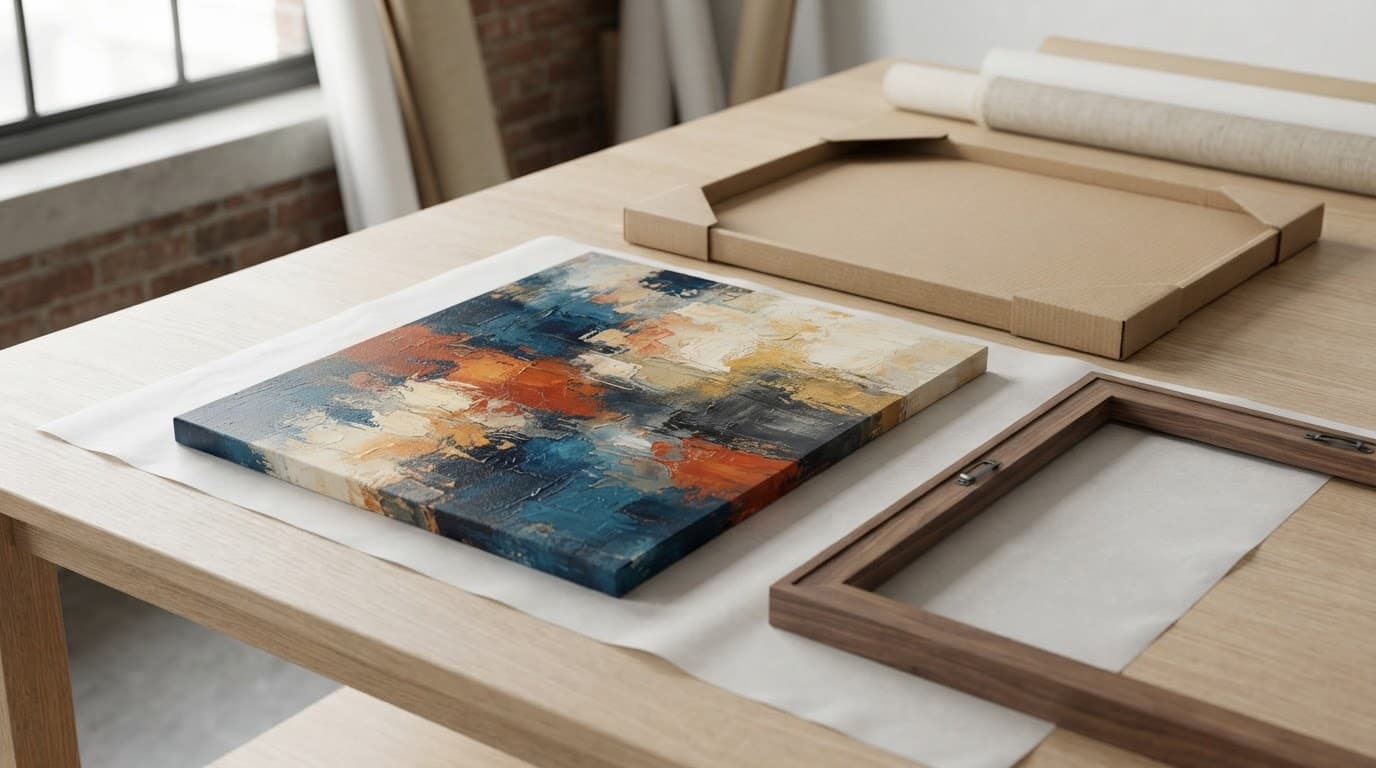
Protective corners, rigid packaging, and clear carrier coverage matter as much as a polished product image.
Large canvas print pieces require more than standard parcel handling. Read how the seller protects the corners of a canvas print, whether the shipment is insured, and which carrier is used. Confirm how a canvas print damage claim works and who pays. Paper art can bend or crease. Canvas can suffer punctures, abrasion, or moisture exposure. Photograph the unopened package and any visible damage before removing protective materials.
For a large statement wall, fine art prints featuring photography make it easier to compare orientation, tonal detail, and framed dimensions before committing to a format.
A delivery policy only protects you when it explains the claims process for a canvas print, the reporting deadline, and who carries the cost if an oversized work arrives damaged.
Calculate the Full Cost and Read Return Conditions
The displayed price for a canvas print is only the first number. Your total landed cost can include:
- The artwork, edition choice, and frame or mount.
- Packing, insured shipping, delivery to a remote area, and installation for a canvas print.
- Sales tax, import VAT, customs duty, and a carrier's clearance fee.
There is no dependable universal price range for an oil painting or for fine art prints. Size, artist, medium, edition size, framing, and provenance all affect cost. Compare like with like, then judge affordable art by total landed cost and material quality, not only the sticker price.
For cross-border orders, ask for the declared value and shipping terms for a canvas print. Get a written estimate of charges that are not prepaid. HMRC's guide to valuing imported goods for VAT illustrates how import tax calculations can depend on more than the artwork's listed price.
Return conditions for a canvas print deserve equal attention. Check the return window, whether you pay return carriage, required packaging, restocking fees, and exclusions for custom framing or custom sizes. In the UK, government guidance on refunds and returns notes that personalized or custom-made goods may have different refund treatment. Buyers elsewhere should read the seller's policy alongside the consumer rules that apply where they live.
Frequently Asked Questions
How can I tell whether online art is an original or a print?
Read the listing for a clear description of the medium, image source, edition type, and production method. If the information is vague, ask the seller directly before purchasing.
What should I check before buying a canvas print?
Confirm the finished dimensions, whether it arrives stretched and ready to hang, and which canvas and inks are used. Also review the packaging, damage-claim process, delivery time, and return conditions.
How do I choose the right art size for my wall?
Measure the usable wall space and the furniture below it, then compare those measurements with the artwork's full framed dimensions. Painter's tape can help you test the proportions and viewing distance before ordering.
What costs should I include in my art-buying budget?
Include the artwork, frame or mount, packing, insured shipping, tax, import charges, and installation where applicable. A low displayed price may not represent the final landed cost.
Does a certificate of authenticity guarantee that art will increase in value?
No. A certificate of authenticity documents details such as the artist, title, medium, dimensions, and edition, but it does not guarantee future resale value.
Choose Art You Will Want to Live With
The strongest online purchase begins with practical checks and ends with work you still enjoy after novelty fades. Measure the wall, verify materials, understand the edition, and account for delivery costs before checkout, even with a canvas print.
When you buy art online with those details in hand, choose wall art for its lasting presence, not only its first impression on a screen. A canvas print still deserves careful attention to materials, scale, and delivery.