A fireplace already draws the eye, so the art above it has a demanding job. That wall art should bring the wall into balance without pulling attention away from the hearth itself.
Choosing the right art above fireplace setup comes down to proportion, placement, material, and mood. A beautiful piece can still feel wrong if it is too narrow, hung too high, or exposed to too much heat. Start with the architecture. In interior design, that foundation helps the room feel intentional. Then choose art that gives the room a clear focal point.
Key Takeaways
- Measure the mantel, firebox, wall height, and surrounding trim before choosing art above the fireplace.
- Aim for artwork that is roughly two-thirds to three-quarters the width of the mantel, with 6 to 12 inches of space above the shelf.
- Check the fireplace type, manufacturer’s clearance requirements, and wall temperature before hanging valuable artwork.
- Choose durable materials and properly rated hardware that suit the heat, wall surface, and artwork’s weight.
- Match the art’s color, style, and visual weight to the room while allowing the fireplace to remain the main focal point.
Measure the Fireplace Before You Choose
Treat the mantel shelf as the frame for your wall art. Measure its full width, the height from the shelf to the ceiling, and the open wall space around it. Also note the firebox width, hearth materials, and any projecting trim.
A deep timber mantel carries more presence than a slim stone ledge. Therefore, it can support a larger, more substantial framed print or canvas art. A narrow mantel often looks better with a simple horizontal work that leaves more breathing room at each end.
The fireplace type matters before you fall in love with a piece. Each one acts as a different heat source, depending on its design, venting, and output. An electric fireplace usually creates the least concern for soot, although its installation guide still controls. A gas fireplace can send heat up the wall, especially when the mantel is shallow or absent. A wood burning fireplace adds greater heat swings, ash, and soot, which can affect art over time.
Check the fireplace manual and local installation requirements before drilling. As a general safety reference, Balsam Hill's fireplace dimension guide recommends placing mantel decor at least a foot above the firebox. The required clearance for your unit may be greater.
A mantel can create visual separation from the firebox, but it does not make the wall above it heat-free.
If you use the fireplace often, run it at a normal setting and test the intended hanging area after it has warmed. If the wall feels noticeably hot, select another location for valuable original art.
Size Art Above a Fireplace With Simple Rules
For most rooms, artwork should be about two-thirds to three-quarters the width of the mantel. This practical interior design proportion keeps the piece connected to the fireplace without making it look squeezed between the mantel ends.
Use these measurements as a starting point:
| Mantel Width | Good Artwork Width | Best Starting Point |
|---|---|---|
| 48 inches | 32 to 36 inches | One medium horizontal piece |
| 60 inches | 40 to 46 inches | One large canvas or framed print |
| 72 inches | 48 to 54 inches | Large statement piece or a paired set |
| 84 inches | 56 to 63 inches | Oversized art or a curated grouping |
For a standard 60-inch mantel, a 40-by-30-inch or 44-by-30-inch piece usually feels balanced. A wide 48-inch work can also suit the space when ceiling height is generous and the mantel has a substantial profile.
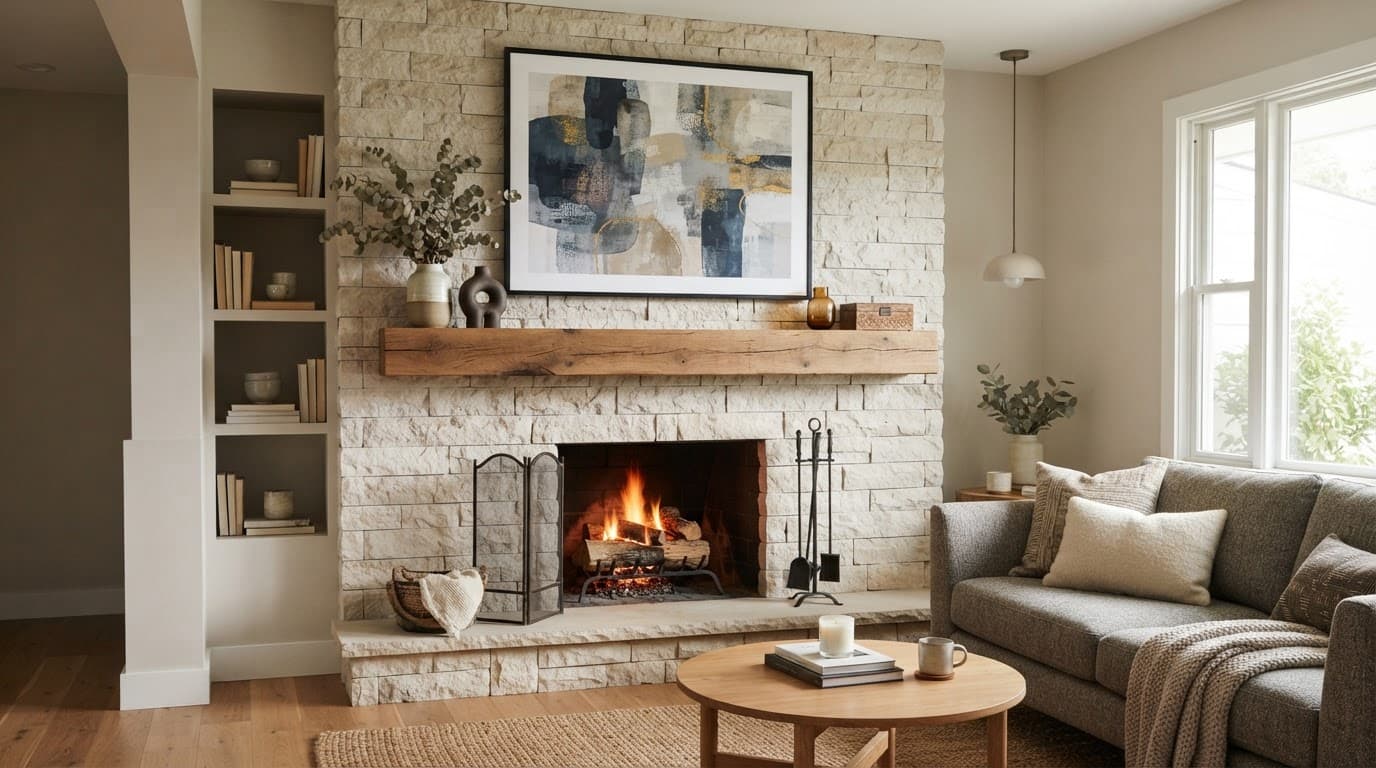
Leave 6 to 12 inches between the top of the mantel shelf and the bottom edge of the frame. Choose the lower end of that range for modest ceilings or smaller pieces. Use more space when a tall mantel, elaborate molding, or a large vertical canvas needs room to breathe.
Don't compensate for tall ceilings by hanging art too high. The gap above the frame can be generous, but the art should still relate to the mantel. Tape painter's paper to the wall at the artwork's final dimensions before buying. This quick test shows whether the width and height feel right from the sofa, entry, and adjoining room.
One large work makes the strongest statement. A pair or gallery arrangement can work well, but the complete arrangement, not each frame, should follow the same width rule. Keep 2 to 3 inches between frames so the group reads as one composition.
Select Materials That Can Handle the Heat
Material choice matters as much as size when the fireplace is in use. A well-made canvas print is practical because it has no glass to reflect flames or collect obvious streaks. Metal prints suit a clean, modern room, but their suitability still depends on wall temperature and the fireplace setup.
Paper works require more care. A framed print in a glass frame can catch glare from windows and firelight. It also shows soot quickly, while a poorly sealed frame can trap moisture against the artwork. If you love delicate work on paper, use conservation-quality framing. Reserve it for a fireplace wall that stays cool.
Can you safely hang a canvas print above a gas fireplace? Only if the wall temperature, required clearances, and manufacturer’s recommendations allow it. There is no universally safe distance. Fireplace inserts, venting systems, mantel depths, and heat output all differ.
For a working wood fireplace, avoid placing irreplaceable original art directly over the opening. A canvas reproduction or durable framed piece makes more sense. Wipe the frame often with a soft, dry microfiber cloth, and inspect it for soot after several fires.
Use hardware that matches the artwork’s weight and the wall. Locate a stud when possible. For brick or stone, use masonry-rated anchors and the correct drill bit. Never rest artwork on the shelf while the fireplace operates, even for a temporary display.
Match the Room's Color, Style, and Visual Weight
Fireplace art should continue a living room's conversation. Start with the surrounding architecture and interior design, then study the largest nearby surfaces: sofa, rug, curtains, hearth stone, and wood tones. Choose one or two colors from the room's color palette, and compare the artwork's visual weight with those elements. If the wall needs reflected light or balance, a large mirror may serve it better than another color.
A neutral living room can handle saturated abstract art because it gives the hearth wall purpose. For example, abstract prints for sale with layered blues, rust, or mineral tones can pick up colors in stone, leather, or textiles. That connection helps the piece integrate with surrounding home decor rather than read as a separate display.
If the fireplace surround is heavily veined marble or patterned tile, simplify the artwork. A restrained color field or monochrome photograph prevents competing patterns, while botanical prints suit a softer room that needs organic texture. In a spare room, however, a bold statement piece can offset a plain white surround.
Black and white art works especially well when the room already has strong architectural lines. These timeless black and white prints add contrast without introducing another color scheme. In a clean, modern room, metal prints can reinforce those crisp lines with a sleek finish.
Fine art photography can create a calmer direction. Consider fine art photography over a mantel when the room needs depth rather than brighter color. Landscape prints, architectural images, and elemental nature studies can give a traditional mantel a modern edge while keeping the mood calm.
Plan Around a Television or Awkward Mantel
A television above the fireplace leaves little room for conventional wall decor. Treat the screen as part of your home decor plan, rather than crowding it with small framed pieces. Use its art-display mode, or place one framed work on a nearby wall where it can stand alone.
When the screen is off, a subdued landscape or abstract image generally looks more natural than a bright, high-contrast photo. Keep the image's visual weight lower than the fireplace surround, especially if the television already creates a black rectangle at the center.
Irregular mantels need an adjusted approach. For an off-center firebox, center the artwork over the full mantel if the shelf is the room's dominant horizontal line. If the chimney breast is clearly narrower than the shelf, center art over that section instead.
Corner fireplaces work best with art that follows the wall plane rather than the diagonal hearth. A tall vertical canvas can help a narrow architectural section feel intentional. Meanwhile, asymmetrical built-ins may call for one larger piece, slightly offset by a lamp, vase, or book stack below.
A Concise Pre-Hanging Checklist
Before you buy art online or commit to a wall location, check the basics:
- Confirm the mantel shelf width, available wall height, and art dimensions with painter's tape.
- Choose a piece that spans roughly two-thirds to three-quarters of the mantel.
- Leave 6 to 12 inches between the mantel shelf and the frame's lower edge.
- Check the fireplace manual, wall temperature, and mounting surface before hanging.
- Match the art's palette and scale to the room, not only to the fireplace.
- Use properly rated hardware, especially for large canvas art or masonry walls.
Frequently Asked Questions
How wide should art above a fireplace be?
Artwork should generally be about two-thirds to three-quarters the width of the mantel. This proportion keeps the piece connected to the fireplace without making the wall feel crowded.
How high should I hang art above a fireplace?
Leave approximately 6 to 12 inches between the mantel shelf and the bottom edge of the frame. Always follow the fireplace manufacturer’s clearance requirements, which may call for more space.
Can I hang a canvas print above a gas fireplace?
A canvas print can be suitable if the wall temperature, mantel arrangement, and required clearances allow it. Check the fireplace manual and test the wall after the unit has warmed before hanging valuable artwork.
What type of art is safest above a working fireplace?
Durable canvas reproductions and well-sealed framed pieces are generally more practical than irreplaceable original works on paper. For a wood burning fireplace, avoid placing valuable original art directly over the opening because of heat, soot, and ash.
Can a television and art share the wall above a fireplace?
When a television occupies the space, use its art-display mode or place one framed work on a nearby wall. Avoid crowding the screen with small pieces, and keep the overall visual weight balanced with the fireplace surround.
Choose a Piece That Lets the Fireplace Lead
The strongest art above fireplace arrangement feels settled rather than staged. It respects the mantel's width, stays close enough to the architecture, and adds color or character without competing with the fire below.
Choose the scale first, then confirm heat conditions, reserving original art for a tested, cooler wall. Finally, let the room's materials guide the artwork. A well-proportioned statement piece turns the fireplace wall into a lasting interior design decision, not another surface that needs filling.