
Joe Papagoda’s creative voice is both calm and powerful. It shows up clearly across the two types of artwork he creates: abstract painting and fine art photography. These are separate practices, yet they sit side by side in his portfolio with a natural rhythm. Each piece has its own visual language, shaped by emotion and intention.
This guide offers a close look at both parts of his work, especially focused on understanding Joe Papagoda's abstract techniques. Whether you're just starting to collect or simply want to know more about how he works, this is the place to begin. As you read, you will gain insight into the methods and ideas that shape every piece, helping you appreciate the details that may not be immediately visible.
How Joe’s Creative Process Shapes Each Work
We don’t separate planning from feeling. Every piece we offer begins with thought, even if that plan stays flexible while the work changes. The creative process is rooted in the balance between intention and intuition, creating unique results each time.
- When painting, Joe lets shapes and lines express things that words can’t. He leans into mood, relying on contrast, visual space, and color shifts to set the tone. There’s no need to show something directly when a gesture can say more.
- With fine art photography, the pace is different. He pays close attention to timing, light, and softness. Photography is a slower watch, less about movement, more about presence. This deliberate approach draws the viewer in, allowing for moments of contemplation and subtle discovery.
Each process stands on its own and shows what it needs to in its own way. Paired together, they offer a steady rhythm. Nothing extra, just enough. Both practices are linked by an underlying respect for simplicity and space, which gives each work its own clarity.
The Power of Simplicity in His Abstract Paintings
Joe's paintings often focus on clarity. That doesn’t always mean minimal, but it means everything has its place. Instead of trying to fill the canvas, Joe uses:
- Open space to let the viewer breathe
- Focused areas of color that shift how the eye moves
- Firm shapes balanced with softer transitions
- Powerful displays of color and form with nuance between heavy paint and soft and fluid like paints that become serene yet bold
With each canvas, Joe’s approach invites closer inspection. Viewers find that the surface reveals itself in layers, sometimes calm, sometimes full of quiet tension. This way of working invites a longer look. There’s tension, but it’s quiet. Strength, but it’s steady. Joe’s work doesn’t try to do too much, it lets the viewer settle in and take their time.
Both restraint and purpose define Joe's use of space. Every element is intentional, and the presence of calm in his compositions gives viewers the ability to connect more deeply with each piece over time.
Photography as Stillness and Movement
In the black and white photographs, the focus often centers on the balance of light and dark. These pieces are about noticing what’s already there, and giving it a place to stand still.
- Strong contrasts highlight shape without noise
- Shadows stretch gently across subjects, holding silence
- Images feel grounded, especially during winter when outdoor color fades
Black and white imagery tends to slow the moment, removing distractions and allowing the subject to reveal itself honestly. By limiting color, Joe emphasizes nuance, the way light lands, or how a shadow lengthens at different times of day. All these subtle choices give each photo quiet depth.
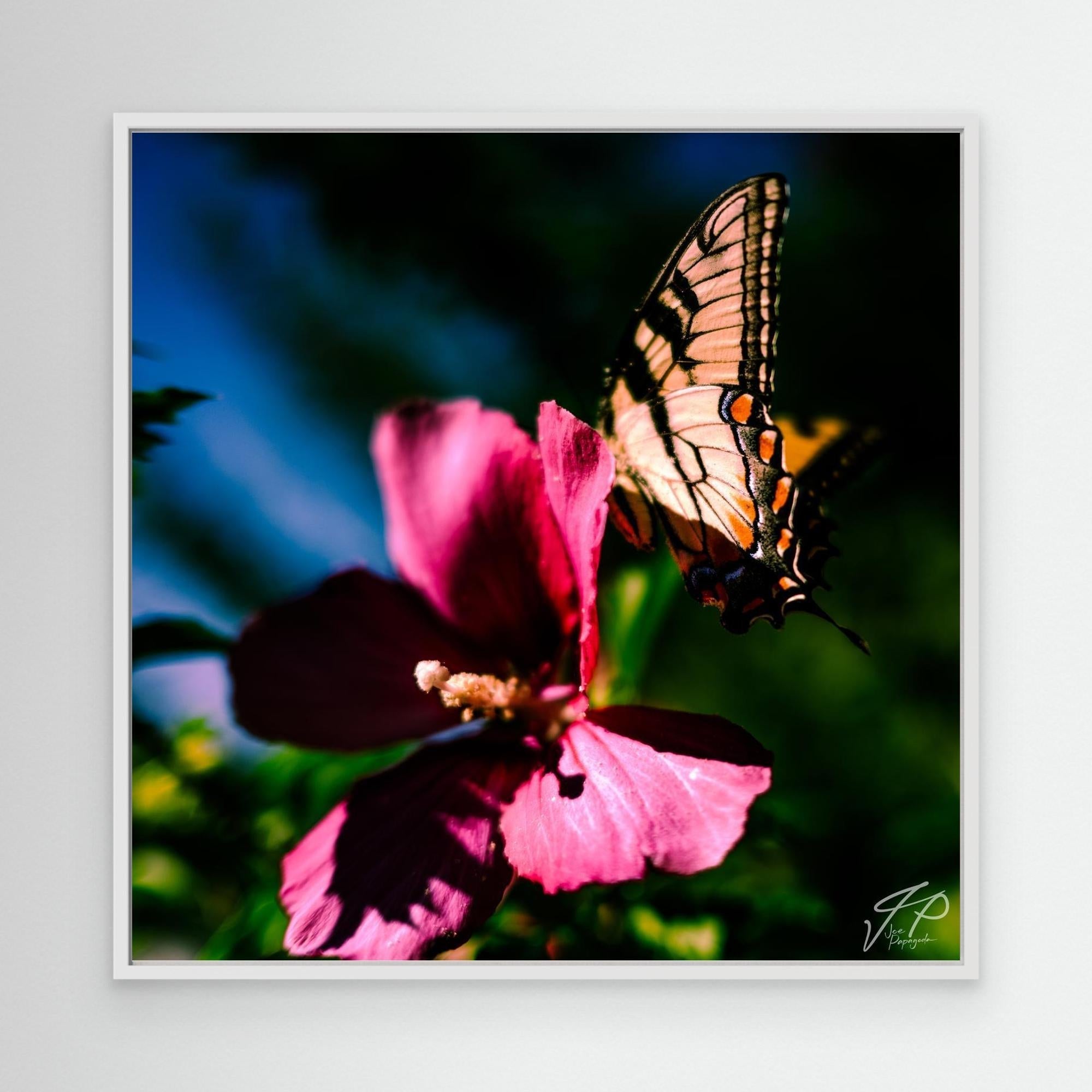
Soon, though, we’re beginning something new. Our butterfly photography project is a sharp contrast to the grayscale pieces, and our guide to butterfly wall art shows how to bring that color and movement into a living room. Instead of stillness and quiet, these photos are all about movement and bursts of color. Wings frozen mid-flight, light catching layers of shape, bright color breaking into a muted room.
This exploration into vibrant detail brings a fresh perspective to his photography. It adds a sense of anticipation and energy to the collection, capturing the fleeting beauty of change. Both sides, still and moving, help define this seasonal shift. One gives pause, the other gives energy.
The contrast between winter’s black and white and spring’s color echoes the shifts in light and life around us. Through the lens, stillness is never absolute, there is always a sense of time moving, of light changing.
Reading Between the Lines: Understanding Joe Papagoda's Abstract Techniques
Understanding Joe Papagoda's abstract techniques means noticing how subtle choices create space for the viewer to respond. He uses:
- Repetition to hold attention without saying too much
- Hard edges to show direction without controlling the reading
- Gentle transitions to invite emotion into the form
Each visual choice is done with care, but never over-explained. Joe allows open meaning. One viewer may see calm. Another might see tension. That space is intentional.
Color plays a quiet role too. Instead of setting a fixed message, it acts more like a suggestion. You can follow it, or not. The piece makes space for that. Joe’s limited palette becomes a subtle guide, neither leading nor pushing, but inviting the viewer to linger and observe.
Shapes and lines in his paintings are not always meant to represent something specific. Instead, they become vehicles for emotion or thought, using form as a way to leave room for personal interpretation. This ambiguity becomes another quiet conversation between artwork and viewer.
Art That Meets the Season
Late February is a quiet time. Days are slowly stretching, but still soft and gray. There’s something about this pause that feels natural for art collecting. It invites reflection before things shift again.
- Right now, our black and white photos work well with this inward mood
- As March nears, the upcoming butterfly project begins to warm things up
- The shift from grayscale to movement mirrors the change from winter to spring
We pay attention to those cues. Smaller changes can help a home feel different without needing to do much. Switching out a piece, moving art from room to room, or simply noticing how morning and evening light play across a surface can make an impact. Art is not a static presence but one that responds with its environment.
This sensitivity to time and setting is part of what makes Joe’s work so adaptable. The pieces naturally seem to align themselves with seasons and moods, creating a steady presence that can ground a space or spark new energy.
A Quiet Connection That Lasts
There’s a softness to the way Joe's work holds space in a room. Over time, each piece takes on something new, depending on the season or light, or even your state of mind.
We believe that’s the point, to offer something steady enough to live with, but open enough to keep learning from. Color, contrast, bold lines, or soft light, it all finds balance over time. And in that balance, something lasting begins.
The adaptability of Joe’s work is part of what keeps viewers returning. A painting or photograph might seem understated at first, but as months go by, its hidden textures, subtle shapes, and gentle tensions slowly reveal themselves. This transformation is part of living with art, it becomes more familiar and yet continually fresh.
If you're captivated by the quiet strength and visual balance in Joe Papagoda’s pieces, consider incorporating his abstract art by Joe Papagoda into your collection. Each piece invites you to explore deeper connections and subtle choices. At ArtFinest, we're proud to offer artwork that encourages reflection and contemplation. Let these expressive pieces bring a unique rhythm to your space and inspire a new perspective in your everyday environment.